sales strategy

687 – Stop Marketing to Strangers: The Two-Filter AI Strategy That Makes Every Message Matter

687 – Stop Marketing to Strangers: The Two-Filter AI Strategy That Makes Every Message Matter
The terrywilson3.com Podcast
687 - Stop Marketing to Strangers: The Two-Filter AI Strategy That Makes Every Message Matter
Loading
/

TW3 Podcast • Episode 687

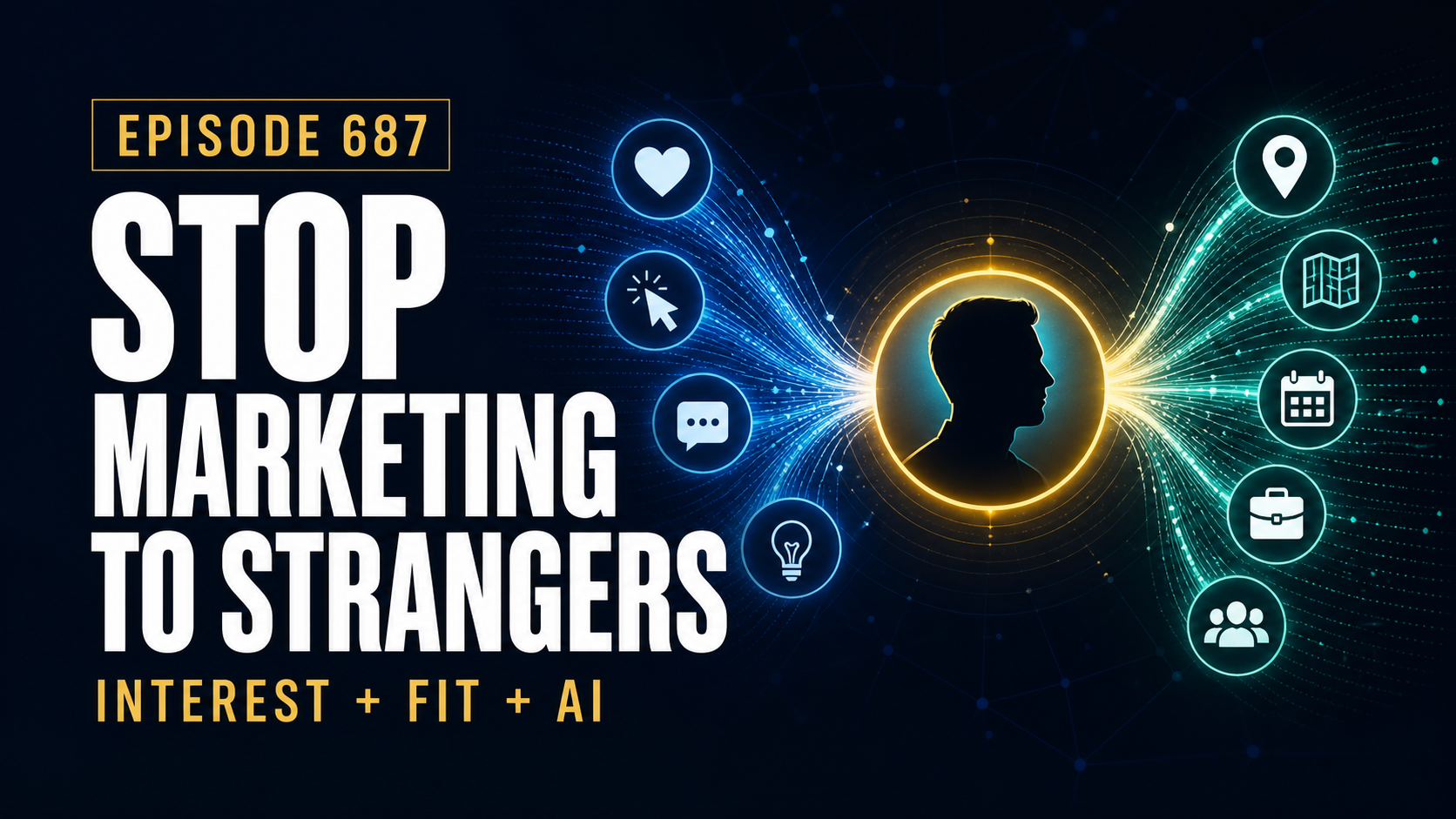
Stop Marketing to Strangers: The Two-Filter AI Strategy That Makes Every Message Matter

Interest without fit wastes attention. Fit without interest wastes money.

For years, organizations faced a frustrating marketing choice: target people who match the right demographics but may have no interest in the offer, or promote to people who show interest but may live outside the service area, lack the practical fit, or simply be unable to use what is being offered.

In Episode 687 of the TerryWilson3.com Podcast, Terry Wilson explains how interest-based demographic marketing can bring those two filters together. With permission-based first-party data and responsible AI, churches, schools, small businesses, sales professionals, and nonprofit organizations can deliver more relevant texts, emails, calls, advertisements, and invitations.

What Is Interest-Based Demographic Marketing?

Interest-based demographic marketing combines two kinds of information:

  1. Expressed interest: What has the person asked about, selected, downloaded, attended, viewed, or requested?
  2. Practical fit: Is the person in the appropriate location, role, life or business stage, service area, time frame, schedule, or voluntarily stated budget range?

The goal is not to collect as much personal information as possible. The goal is to use the minimum amount of lawful, accurate, and permission-based data required to make communication more helpful.

Interest tells you what matters to the person. Practical and demographic fit tell you whether your opportunity belongs in that person’s world.

This approach allows organizations to build an audience they understand instead of depending entirely on targeting decisions made by Meta, Google, or outside data brokers. Those platforms may still help distribute a message, but the organization owns the relationship, understands why the person is being contacted, and can communicate across channels according to that person’s permission.

Why Interest and Demographics Work Better Together

Demographic information by itself can identify people who appear to fit a general customer profile. It cannot prove that they currently want or need the offer. Interest data can reveal curiosity or intent, but it does not guarantee that the person can actually access, use, or benefit from the product, program, or service.

The most useful audience is found where those two groups overlap: people who have demonstrated interest and people the organization can genuinely serve.

Research discussed in this episode supports personalization while also warning against overtargeting. A large randomized email study found that even simple personalization increased attention and sales leads. Other advertising research shows that personalization depends on timing, placement, data quality, and context. Narrower is not automatically better. Reliable information and a relevant message matter more than simply collecting more data.

For more practical ideas on using technology without losing personal connection, listen to Episode 657: AI Plays That Give Small-Business Owners a Competitive Edge. You can also explore TW3’s AI marketing services for small businesses.

How Pastors and Churches Can Use Interest-Based Data

A church may already have visitor forms, ministry selections, event registrations, volunteer interests, preferred service times, prayer requests, and neighborhood information. Unfortunately, that information is often scattered across several systems and used only for generic announcements.

Imagine that a visiting family voluntarily selects children’s activities, marriage enrichment, and community service. They live nearby, prefer text messages, and are usually available on Wednesday evenings. Instead of sending a long list of every church program, the church can offer one relevant next step:

“You mentioned children’s activities and community service. This Wednesday, families are assembling weekend food bags for a nearby school, and childcare is available. Would you like the details?”

That is not surveillance. It is attentive communication—provided the church protects sensitive information, restricts access, honors consent, and never turns pastoral care into pressure.

How Small Businesses Can Reduce Wasted Marketing

A local service company might combine topic interest with service area, property type, purchasing time frame, appointment preference, and the customer’s stated need. A restaurant might distinguish between people interested in lunch specials, catering, live music, family meals, or private events. A bookkeeping firm might separate payroll prospects from companies seeking tax preparation or overdue-book cleanup.

The result is more useful communication and fewer irrelevant promotions.

TW3 helps business owners connect these ideas through lead generation services, marketing automation, and small-business marketing systems. If slow or inconsistent response is costing your business opportunities, read Why Most Small Businesses Struggle With Follow-Up.

How Sales Professionals Can Prioritize Better Opportunities

Most pipelines combine casual curiosity, long-term research, active buying intent, and unqualified contacts in one list. A two-filter system can create a clearer relevance ladder:

  • High interest and high fit: Provide fast, personal follow-up.
  • High interest and uncertain fit: Ask one helpful qualifying question.
  • High fit and low interest: Offer useful education or remain respectfully silent.

When a salesperson understands the prospect’s stated interest, service fit, role, time frame, and communication preference before the call, the conversation can begin with the actual problem instead of a generic pitch.

Terry has personally experienced a 92% closing rate on calls filtered by both demonstrated interest and practical demographic fit. That is a personal result, not a universal guarantee, but it illustrates the potential impact of stronger qualification before the sales conversation.

For additional sales training, listen to Episode 615: A Cold-Calling Framework for Closing Deals.

Applications for Schools and Community Organizations

Schools can help prospective families discover programs related to their stated interests in arts, athletics, advanced coursework, career preparation, financial aid, or student support. Location, grade level, language preference, event availability, transportation, and program eligibility can help provide accurate next steps.

Nonprofits can distinguish among volunteers, donors, service recipients, advocates, and event attendees. They can then match a person’s interest with practical details such as distance, availability, skills, accessibility needs, or requested level of involvement.

These systems should improve access rather than conceal opportunities. Protected characteristics must never be used to unlawfully exclude people, and information involving children or sensitive personal circumstances requires especially careful protection.

What AI Adds to the Process

AI can help a smaller organization perform work that once required a large data or marketing department. It can:

  • Standardize inconsistent contact and location information.
  • Recognize themes across forms, questions, registrations, and engagement.
  • Score the combination of interest, fit, recency, and response behavior.
  • Recommend a useful next message, resource, or conversation.
  • Measure results and help improve qualification rules over time.

AI does not magically create accurate or ethical data. It helps an organization interpret and act on information that was collected lawfully. Predictions should remain labeled as predictions, staff should be able to see why a contact received a score, and a human being should verify important decisions.

This high-tech, high-touch approach connects directly with Episode 680: Why People Are Leaving Big Brands for Small Businesses, which explains why trust and human connection remain competitive advantages even as technology becomes more powerful.

Use Data Responsibly

Powerful targeting requires strong guardrails. Organizations should clearly explain what people are signing up to receive, maintain channel-specific permission records, minimize the information they collect, protect sensitive records, honor opt-outs, and regularly remove stale data.

Actual consumer credit reports and credit scores should not be treated as ordinary marketing filters. Most organizations can instead use transparent qualification information such as a voluntarily selected budget range, desired payment range, purchasing time frame, program eligibility, or a direct request to begin an authorized prequalification process.

Email, telephone, text-message, privacy, consumer-reporting, education, housing, employment, lending, insurance, and anti-discrimination requirements vary by context and jurisdiction. Organizations should obtain qualified legal guidance before collecting sensitive information or automating outreach.

What You Will Learn in Episode 687

  • Why interest alone and demographics alone both create marketing waste.
  • How to build a two-filter audience using interest and practical fit.
  • How churches can create more meaningful ministry invitations.
  • How small businesses can improve targeting without a massive advertising budget.
  • How sales professionals can prioritize better-qualified conversations.
  • How schools and nonprofits can improve relevance and access.
  • How AI can organize first-party data and recommend better next steps.
  • Why consent, transparency, fairness, and data quality must remain central.

A Simple Way to Get Started

Begin with one campaign, one audience, and one measurable outcome. Identify:

  • One or two fields that reveal expressed interest.
  • Two or three practical fields that establish fit.
  • The communication channels the person agreed to receive.
  • The date of the most recent interest signal.
  • The outcome produced by the follow-up.

Test the qualified segment against a reasonable comparison group. Measure appointments, attendance, conversions, revenue, retention, mission outcomes, opt-outs, and complaints—not merely clicks.

Related TW3 Resources

Research Mentioned in This Episode

Frequently Asked Questions

What is interest-based demographic marketing?

It is the practice of combining a person’s expressed interests with lawful, relevant information about practical fit, such as location, role, time frame, schedule, or voluntarily stated budget range.

Can a small business use AI for audience targeting?

Yes. AI can organize first-party data, identify patterns, score engagement, recommend follow-up, and measure outcomes. The business still needs clear permission, accurate information, human review, and a sound marketing strategy.

Does more targeting always produce better results?

No. Extremely narrow segments can become expensive or unreliable, particularly when data quality is poor. Organizations should test their segments against broader comparison groups and measure meaningful outcomes.

Should a business use consumer credit scores for marketing?

Consumer reports generally cannot be used as ordinary target-marketing lists. Businesses should use lawful and transparent qualification information and obtain specialized legal guidance when operating in regulated areas.

686 – You Cannot Market Your Way Out of a Broken Business Model

686 – You Cannot Market Your Way Out of a Broken Business Model
The terrywilson3.com Podcast
686 - You Cannot Market Your Way Out of a Broken Business Model
Loading
/

The TerryWilson3.com Podcast • Episode 686

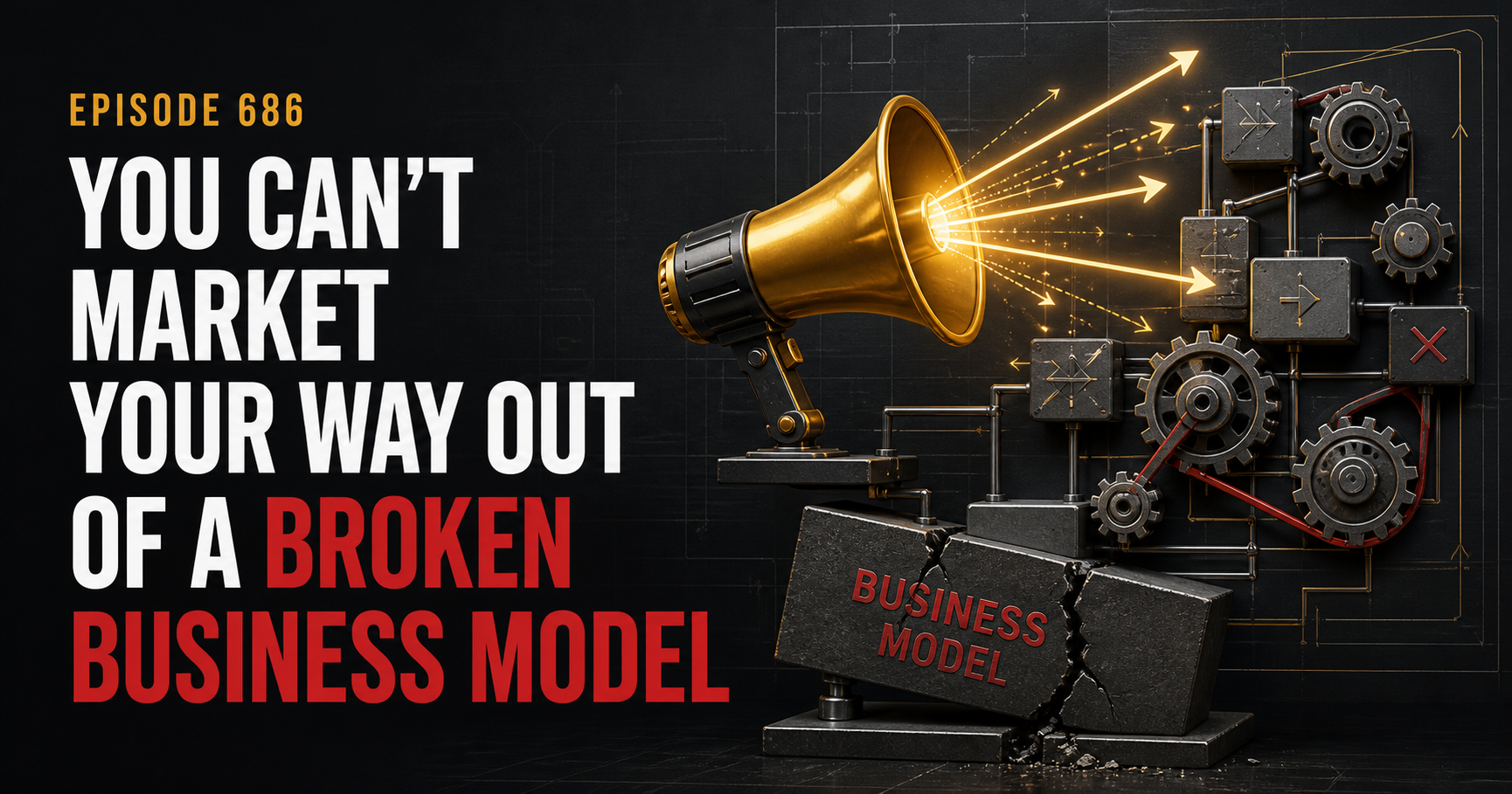
You Cannot Market Your Way Out of a Broken Business Model

Sometimes the biggest problem in a business is not the marketing, management, technology, or staff. Sometimes the business itself is built around a contradiction.

When a business struggles, we usually blame the most visible thing.

We say it needs a better website, more leads, stronger content, a new sales funnel, better technology, more automation, a different manager, or another employee.

Sometimes one of those things really is the problem. But sometimes improving them only helps the business execute the wrong idea more efficiently.

That is the subject of Episode 686 of the TerryWilson3.com Podcast: the difference between a marketing problem and a business-model problem.

In This Episode

  • Why better marketing can expose a weak business model faster
  • How a company can contradict the very result it promises
  • Why targeting the wrong customer is deeper than a messaging mistake
  • How pricing, delivery, incentives, and technology must work together
  • The difference between tactic, management, capability, and model problems
  • Five tests you can use to evaluate your own business
  • How to redesign a contradiction before spending more money promoting it

When the Promise and the Proof Disagree

Consider a coaching company that teaches branding, authenticity, authority, and differentiation.

Its basic sales appeal is valid: clients prefer to buy from people who appear authentic, possess authority in their field, and offer a distinct advantage.

But what happens when that same company borrows another organization’s brand to create authority, uses AI-generated versions of its people to present supposedly authentic content, and delivers material that appears copied from other coaching firms?

The problem is not that branding is unimportant. The problem is not that AI is always wrong. The problem is that the company is making one argument with its words and another argument with its behavior.

If you sell authenticity, customers need opportunities to encounter the real you. If you sell independent authority, you need ideas, results, and intellectual property that can stand without another company holding them up. If you sell differentiation, your method cannot look like a copy of everything already in the marketplace.

People may not describe that inconsistency in technical terms. They simply say, “Something feels off.”

AI Is Not the Villain

AI can improve research, production, editing, organization, follow-up, and customer service. It can give small businesses capabilities that once required a large staff.

The real question is not whether AI is good or bad. The question is: Does this use of AI reinforce or contradict the result you are selling?

The Marketing Company That Markets to Marketers

I regularly receive generic LinkedIn messages from companies pitching marketing services.

They are pitching their marketing to an online marketer.

Before I can evaluate their service, their own message has already created evidence against their claim. They say they understand targeting, positioning, communication, and customer acquisition—but demonstrate that claim with an irrelevant message that could have been sent to almost anyone.

So I give them an opportunity to demonstrate their confidence. I invite them into our affiliate program, provide additional assets and resources, and offer performance-based compensation that can grow according to the results they create.

It is amazing how quickly that offer gets to the bottom of how confident some people really are in their own marketing.

To be fair, there are legitimate reasons a marketing firm may not work entirely on commission. A marketer does not control every part of a client’s sales, pricing, fulfillment, reputation, or retention. But the response still exposes important questions:

  • Who carries the risk?
  • What result does the provider actually control?
  • Is compensation connected to the value being promised?
  • Does the company’s own customer acquisition demonstrate its claimed ability?

A contact is not automatically a qualified prospect. Access to someone’s inbox is not evidence that they need what you sell.

Marketing Is an Amplifier, Not an Alchemist

Marketing can attract attention, clarify value, improve timing, and connect an offer with the right person. What it cannot do is permanently turn a contradiction into credibility.

Bad Economics

More advertising can accelerate losses when acquiring and serving a customer costs more than the profit that customer creates.

Wrong Customers

A stronger campaign can fill the pipeline with more people who cannot benefit from, afford, or successfully use the offer.

Broken Delivery

More sales can create disappointed customers faster when fulfillment cannot deliver what the promotion promises.

If your business loses money on a typical successful transaction, you do not have an advertising problem. If the service disappoints the exact people the marketing attracts, you do not have a lead problem. If growth makes the company weaker, you do not have a scale problem.

You have a model problem.

Four Problems That Are Easy to Confuse

  1. A tactic problem: The basic logic works, but one activity needs improvement. The landing page may be confusing, calls may not be returned, or follow-up may be too slow.
  2. A management problem: The correct activities are known, but responsibilities, standards, communication, or accountability are unclear.
  3. A capability problem: The company lacks a necessary skill, resource, relationship, or technology.
  4. A business-model problem: The activities can be executed exactly as designed and the outcome still does not make economic or strategic sense.

Model problems require redesign—not merely optimization.

Five Tests for Your Business Model

1. The Proof Test

Does the way you operate demonstrate the thing you sell? If you sell speed, are you fast? If you sell simplicity, is it easy to buy? If you sell authenticity, can customers encounter the real you?

2. The Incentive Test

Does the company make more money when the customer succeeds? Do commissions reward the right customer outcome, or merely the quickest sale?

3. The Economics Test

Does a typical customer eventually create more gross profit than it costs to acquire, deliver to, support, and retain that customer?

4. The Target Test

Does your chosen customer recognize the problem, possess the ability to buy, and have a compelling reason to choose you?

5. The Coherence Test

Do your target, promise, pricing, technology, delivery, and compensation reinforce one another—or are they pulling the company in opposite directions?

Research Supports the Importance of the Model

A study of 331 Australian firms found that innovation without clarity in the business model produced only modest or negligible performance outcomes. The business-model design helped translate innovation into actual firm performance.

A separate longitudinal study examined more than 2,300 business-model innovation events across 60 publicly traded German companies. It evaluated how companies change value creation, the value proposition, and value capture—in other words, how value is produced, what is promised, and how the company gets paid.

The research is a useful reminder: an impressive tool or clever innovation does not automatically create a healthy company. The innovation has to live inside a coherent system.

Research: Gronum, Steen, and Verreynne; Menter, Göcke, Zeeb, and Clauss; Harvard Business School Institute for Strategy and Competitiveness.

The Episode 686 Challenge

Take one sheet of paper and write down five things:

  1. Who we serve
  2. What we promise
  3. How we prove it
  4. How we deliver it
  5. How we make money from it

Then look for the contradiction. Do not search for a clever way to defend what you already do. Look for the place where a reasonable customer might say, “Wait a minute. Those two things do not match.”

Before you spend money on another campaign, ask: Am I amplifying value—or amplifying a contradiction?

The Bottom Line

You may not need more leads. You may need a better customer.

You may not need another sales script. You may need a more believable offer.

You may not need more staff. You may need to stop promising a level of access your pricing cannot support.

You may not need another AI tool. You may need to decide whether that tool reinforces the trust your offer requires.

And you may not need louder marketing. You may need a business that gives the marketing something coherent to say.

Get the logic right. Get the incentives right. Get the target right. Get the promise and proof to agree. Then use marketing, management, technology, and your team to amplify something worth amplifying.

Listen to Episode 686

Listen to the complete conversation, subscribe to the TerryWilson3.com Podcast, and share this episode with a business owner who may be trying to market their way out of a model problem.

Explore the TW3 Podcast

Looking for practical help with your business model, marketing, automation, or growth systems? Visit TerryWilson3.com.

681 – Why Every Business Should Create Its Own Product, Good, or Service

681 – Why Every Business Should Create Its Own Product, Good, or Service
The terrywilson3.com Podcast
681 - Why Every Business Should Create Its Own Product, Good, or Service
Loading
/

Why Every Business Should Create Its Own Product, Good, or Service

Episode 681 of The TerryWilson3.com Podcast

Every business needs customers. Every business needs attention. Every business needs a reason for people to choose them instead of everyone else in the marketplace.

But here is the problem: when your business looks, sounds, and offers the same thing as everyone else, you eventually get forced into one of the worst positions in business.

You start competing on price instead of value.

That is why in Episode 681 of the podcast, I talk about why every company, business owner, entrepreneur, agency, church, consultant, realtor, insurance agent, and service provider should seriously consider creating their own unique product, good, or service.

Not because you need another complicated thing to manage.

But because a unique offer gives you leverage.

It helps you stand out. It creates value. It positions you differently. It gives your audience a reason to raise their hand and pay attention.


The Marketplace Rewards Unique Value

People are not just looking for another business. They are looking for a solution.

When you create a unique product or service around the problem your audience already has, you stop sounding like another salesperson and start becoming a resource.

That is the real advantage.

A product does not have to be something you manufacture in a warehouse. A product can be:

  • A software tool
  • A checklist
  • A training program
  • A consulting package
  • A service bundle
  • A calculator
  • A lead magnet
  • A membership
  • A branded system
  • A repeatable process

At its core, a product is simply a repeatable solution to a real problem.

And once you learn how to package what you know, what you do, or what your market needs, you can create something that generates attention, builds trust, captures leads, and opens doors for revenue.


Real Examples From TW3

In this episode, I share several recent examples of products and tools we have built through TW3 to serve specific markets.

1. Market My Coverage for Insurance Agents

Insurance agents need visibility. They need content. They need a way to stay in front of their audience without spending all day trying to figure out what to post.

That is why we created Market My Coverage.

This tool helps insurance agents create ready-to-use marketing content so they can show up more consistently and communicate with their market in a more professional way.

The lesson is simple: you do not always have to create a brand-new industry. Sometimes the best product is a tool that helps an existing industry solve a common problem faster.

2. Market My Listing for Realtors

We also created Market My Listing for real estate professionals.

Realtors already have listings. They already have buyers and sellers to serve. But many struggle with content, marketing, follow-up, and standing out in a crowded local market.

Market My Listing gives them a simple way to create listing-related content and marketing material around what they are already doing.

That is what a great product can do. It can take work someone is already doing and make it easier, faster, cleaner, and more valuable.

3. KidTrack Check-In for Churches, Schools, and Youth Programs

Another example is KidTrack Check-In.

This started from a real need. Churches, schools, camps, and youth programs need a simple way to register students, check them in, track attendance, manage important information, and keep better records.

Instead of waiting on some expensive system to solve the problem, we built a practical tool that can help organizations right now.

You can also read more about the free plugin here: KidTrack Check-In: A Free Student Check-In & Attendance Plugin.


The Big Question: What Problem Do You Keep Solving?

If you are trying to come up with your own product idea, do not start by asking, “What can I sell?”

Start by asking better questions:

  • What problem do people constantly ask me about?
  • What do I already know how to solve?
  • What process do I repeat over and over?
  • What shortcut have I learned that others need?
  • What tool would make my customer’s life easier?
  • What service could I package into a clear offer?
  • What information could I turn into training?

That is where product ideas come from.

They do not always come from trying to be clever. Many times, they come from paying attention to the problems sitting right in front of you.


Why Having Your Own Offer Creates Competitive Advantage

A unique product, good, or service helps your business in several important ways.

It makes you easier to remember.

People may forget another ad, another pitch, or another generic service offer. But they remember a specific solution with a specific name that solves a specific problem.

It gives you something to promote besides yourself.

This is powerful. Instead of constantly saying, “Hire me,” you can say, “Here is a tool that can help you.”

That changes the conversation.

It creates lead generation opportunities.

A good product can attract people into your world. It can become the front door to a larger relationship.

If you need help understanding how lead generation works as a system, read this guide: What Is Lead Generation? A Small Business Guide.

It gives you authority.

When you create a solution, people see you differently. You are no longer just talking about the market. You are contributing to it.

It can create additional revenue streams.

Your product may become something you sell, license, give away to generate leads, use to book appointments, or bundle into a larger service.

The point is not always immediate revenue. Sometimes the greater value is positioning, trust, and opportunity.


Why TW3 Is Built for This Moment

This is why I am so excited about what we are doing at TW3.

We are not just talking about theory. We are building real tools, real systems, real offers, and real examples that entrepreneurs can model.

Through TW3, business owners and entrepreneurs can access the tools, training, technology, coaching, automation, AI support, and marketing systems needed to create and promote their own unique offers.

If you need help creating better systems, start here:

The tools are available. The technology is available. The training is available.

The question is whether you are willing to stop waiting and start building.


Recommended Supplemental Episodes and Articles

If this episode connects with you, these additional resources will help you go deeper:


Final Thought

You do not need to be the biggest company in your market to win.

You need to be clearly positioned.

You need to solve a real problem.

You need an offer that makes people stop and say, “That is exactly what I need.”

That is the power of creating your own product, good, or service.

At TW3, we help entrepreneurs and business owners take ideas, tools, technology, and strategy and turn them into practical offers that can create attention, trust, leads, and revenue.

If you are ready to start building your own unique product or service, visit TerryWilson3.com and explore the tools, training, and resources available through TW3.

The future belongs to the builders.

And there has never been a better time to start building than right now.

678 – Stop Chasing, Start Choosing: The Real Reason Your Business Isn’t Scaling

678 – Stop Chasing, Start Choosing: The Real Reason Your Business Isn’t Scaling
The terrywilson3.com Podcast
678 – Stop Chasing, Start Choosing: The Real Reason Your Business Isn’t Scaling
Loading
/

678 – Stop Chasing, Start Choosing: The Real Reason Your Business Isn’t Scaling

Episode 678 of The TerryWilson3.com Podcast

What if the reason your business is not scaling has less to do with your product, your price, or even your work ethic — and more to do with who you are choosing to serve?

In this episode, Terry Wilson breaks down why many entrepreneurs, sales professionals, coaches, consultants, and small business owners stay stuck chasing the wrong people, fixing the wrong problems, and spending valuable time on clients who were never truly ready to move forward.

This episode pulls together several recent business lessons from the TW3 blog, including the importance of choosing the right clients, building a consistent lead stream, and creating systems that help ordinary people move from frustration to freedom.

In This Episode

  • Why not every paying client is a profitable client
  • The hidden cost of taking on clients who are not ready
  • How disorganized clients can drain your time, energy, budget, and momentum
  • Why a steady lead stream gives business owners more confidence and control
  • How systems, strategy, and better alignment create real business growth
  • Why many people are not lazy — they are simply operating without the right model
  • How TW3 helps entrepreneurs and professionals stop guessing and start building

The Big Idea

Most struggling business owners do not need more pressure. They need better positioning.

When you are desperate for every client, every lead feels like a lifeline. But when you have a stronger process, better systems, and a more consistent flow of opportunity, you can stop chasing and start choosing.

That shift changes everything.

Blog Posts Referenced in This Episode

Why This Matters for Business Owners

Scaling a business is not just about doing more. It is about doing the right things with the right people through the right process.

Many entrepreneurs burn out because they confuse activity with progress. They take on clients who need rescue instead of results. They chase leads instead of building a system. They stay busy but never build leverage.

This episode challenges that pattern and gives you a clearer way to think about client selection, business growth, marketing systems, and long-term momentum.

Key Takeaway

You do not scale by saying yes to everyone. You scale by building a business that attracts better opportunities, filters better clients, and gives you the confidence to choose wisely.

Ready to Build With Better Systems?

If you are ready to stop chasing, start choosing, and build a business with better systems, better strategy, and better support, visit:

https://coachwithtw3.com

You can also explore more business growth resources, podcast episodes, and training at:

https://terrywilson3.com

654 – Bible Reading — The Ultimate Self-Care

The terrywilson3.com podcast
654 - Bible Reading — The Ultimate Self-Care
Loading
/

Most people think of self-care as hitting the gym, meditating, or taking time off. But what if the most powerful form of self-care wasn’t found in a fitness app or spa day… but in the Bible?

In this episode, Terry Wilson unpacks surprising new research from the American Bible Society that reveals how regular Bible reading reduces stress, lowers anxiety, boosts hope, and combats loneliness more effectively than exercise or meditation.

For entrepreneurs, small business owners, and leaders juggling stress and uncertainty, this is a game-changer. Terry explores:

✅ Why Bible engagement outperforms popular self-care practices
✅ How faith practices fuel resilience, clarity, and purpose in business
✅ Practical ways to integrate Scripture into your daily routine without adding stress
✅ The 5-step “Bible Self-Care Plan” you can start today

🎬 Plus, Terry reacts to powerful clips that highlight how the Bible reframes modern ideas of self-care and challenges us to think deeper about purpose and well-being.


🔑 Key Takeaways

  • Spiritual disciplines go deeper than quick-fix self-help trends

  • Scripture anchors meaning when motivation runs out

  • Entrepreneurs who weave faith into their rhythms build stronger resilience

  • Bible reading is sustainable self-care you can practice daily


📌 Resources & Links


🙌 Connect & Share

If this episode encouraged you, subscribe on Spotify, Apple Podcasts, or YouTube so you never miss a new show. Share it with someone who needs encouragement today.

👉 Remember: You are worth more!

653 – Building a Business That Fits YOU

The terrywilson3.com podcast
653 – Building a Business That Fits YOU
Loading
/

Too many entrepreneurs make the mistake of trying to fit themselves into a business, instead of building a business that actually fits them. In this episode of the terrywilson3.com podcast, I’ll walk you through how to discover and align with your unique design in three key areas:

  1. Personality Makeup – using the Myers-Briggs framework to understand how you’re wired.
  2. Professional Skills – identifying what you can actually do that creates value.
  3. Passions – tapping into the things you naturally love and are drawn to.

By the end of this episode, you’ll know how to find the “sweet spot” where personality, skills, and passions overlap—creating a business or career path that doesn’t just pay the bills, but gives you fulfillment and energy.

🎁 Plus, I’m offering a FREE Career Assessment Guide exclusively for this episode. Just go to terrywilson3.com and mention Episode 653 to claim yours.

👉 Don’t waste another year trying to force yourself into a role that doesn’t fit. Instead, discover the opportunities that fit you.


652 – The Ozempic Economy: How Weight-Loss Drugs Are Reshaping Small Business

The terrywilson3.com podcast
652 - The Ozempic Economy: How Weight-Loss Drugs Are Reshaping Small Business
Loading
/

What happens when millions of people eat less, drink less, and shop differently—overnight? You get The Ozempic Economy.

In this episode, Terry Wilson breaks down how GLP-1 weight-loss drugs like Ozempic and Wegovy are transforming consumer behavior and what that means for small business owners across industries.

You’ll discover:

  • How restaurants, retail shops, and snack brands are being disrupted.

  • Why gyms, boutiques, and wellness businesses are seeing new opportunities.

  • What every entrepreneur needs to do now to adapt marketing, menus, and services.

  • A practical playbook for positioning your business in the health-conscious economy.

👉 Learn more at terrywilson3.com/652

Hashtags: #OzempicEconomy #SmallBusiness #Entrepreneurship #BusinessTrends #TW3Podcast

651: The GPT-5 Playbook — 5 Productivity Hacks Every Entrepreneur Needs Now

The terrywilson3.com podcast
651: The GPT-5 Playbook — 5 Productivity Hacks Every Entrepreneur Needs Now
Loading
/

🎧 Listen & show notes: terrywilson3.com/651

In this episode of the TW3 Podcast, Terry reveals how ChatGPT-5 is transforming the way entrepreneurs and small business owners work, scale, and win in today’s fast-paced market.

We’re not talking about generic AI tips — these are five game-changing productivity hacks you can start using immediately to save hours, close more deals, and create high-quality content without burning yourself out.

Whether you’re a solopreneur, a small business owner, or part of a growing team, you’ll discover how GPT-5 can:

  • Write custom client proposals and emails in minutes

  • Turn a single idea into multi-platform content instantly

  • Give you fast, deep client research before a call

  • Act as your 24/7 brainstorming partner

  • Build systems, SOPs, and workflows so you can scale without stress

💡 Why listen?
Because GPT-5 isn’t just a chatbot — it’s your AI business partner. And the sooner you start using it strategically, the faster you’ll see results in your time, your output, and your bottom line.

📌 Resources & Links Mentioned:

00:00 – WOW Opener: The most productive team member you’ll hire this year isn’t human
01:20 – Why GPT-5 is a game-changer for entrepreneurs
05:00 – Hack #1: The AI Email & Proposal Factory
08:12 – Hack #2: The Idea-to-Content Machine
12:05 – Hack #3: The Client Research Shortcut
15:15 – Hack #4: The 24/7 Brainstorm Partner
18:30 – Hack #5: The System Builder
22:45 – Final thoughts + How to book a call with Terry

GPT-5 for business, ChatGPT-5 productivity hacks, AI for entrepreneurs, GPT-5 small business tools, AI automation for business owners, GPT-5 workflow automation, how to use ChatGPT-5 for marketing, GPT-5 content creation, AI business growth strategies, Terry Wilson podcast, TW3 business coaching

#GPT5 #ChatGPT5 #SmallBusiness #Entrepreneur #ProductivityHacks #AIForBusiness #BusinessGrowth #TerryWilson3 #TW3Podcast #ArtificialIntelligence #MarketingAutomation #SmallBusinessTips #ContentCreation #BusinessOwner #AIAutomation

If you want, I can also create a YouTube thumbnail text + title combo that’s clickable and optimized for curiosity so this episode gets maximum clicks when posted. That could help spike your views right out of the gate.

Episode 651: The GPT-5 Playbook — 5 Productivity Hacks Every Entrepreneur Needs NowTimestampsKeywords & SEO TagsHashtags for YouTube & Social

650 – What do you see?

The terrywilson3.com podcast
650 - What do you see?
Loading
/

🌍 When Vision is Narrow: Seeing Beyond What You See

If you set a level on the ground and see the bubble centered, it’s easy to assume the ground is perfectly flat. But step back far enough, and you realize the earth itself curves.

The problem isn’t the tool—it’s the perspective.

In life, faith, and business, a limited vision can lead us to wrong conclusions:

  • That a setback means failure.

  • That silence from God means absence.

  • That today’s struggle is the end of the story.

“When vision is narrow, even truth appears false.”

Scripture reminds us:
📖 “Where there is no vision, the people perish…” (Proverbs 29:18).

This podcast explores:
✅ Why limited vision distorts reality.
✅ How to expand your perspective in life and business.
✅ Practical steps to align your sight with God’s bigger picture.

🎧 Listen now and discover how to see beyond what you see.