
How to Thrive in a Toxic Workplace: Navigating Difficult People, Office Politics, and Challenging Work Environments
By Terry Wilson
Let’s be honest.
Most people don’t leave jobs because of the work itself. They leave because of people.
A difficult boss. A toxic coworker. Office politics. Constant drama. Poor communication. Lack of appreciation. Unrealistic expectations.
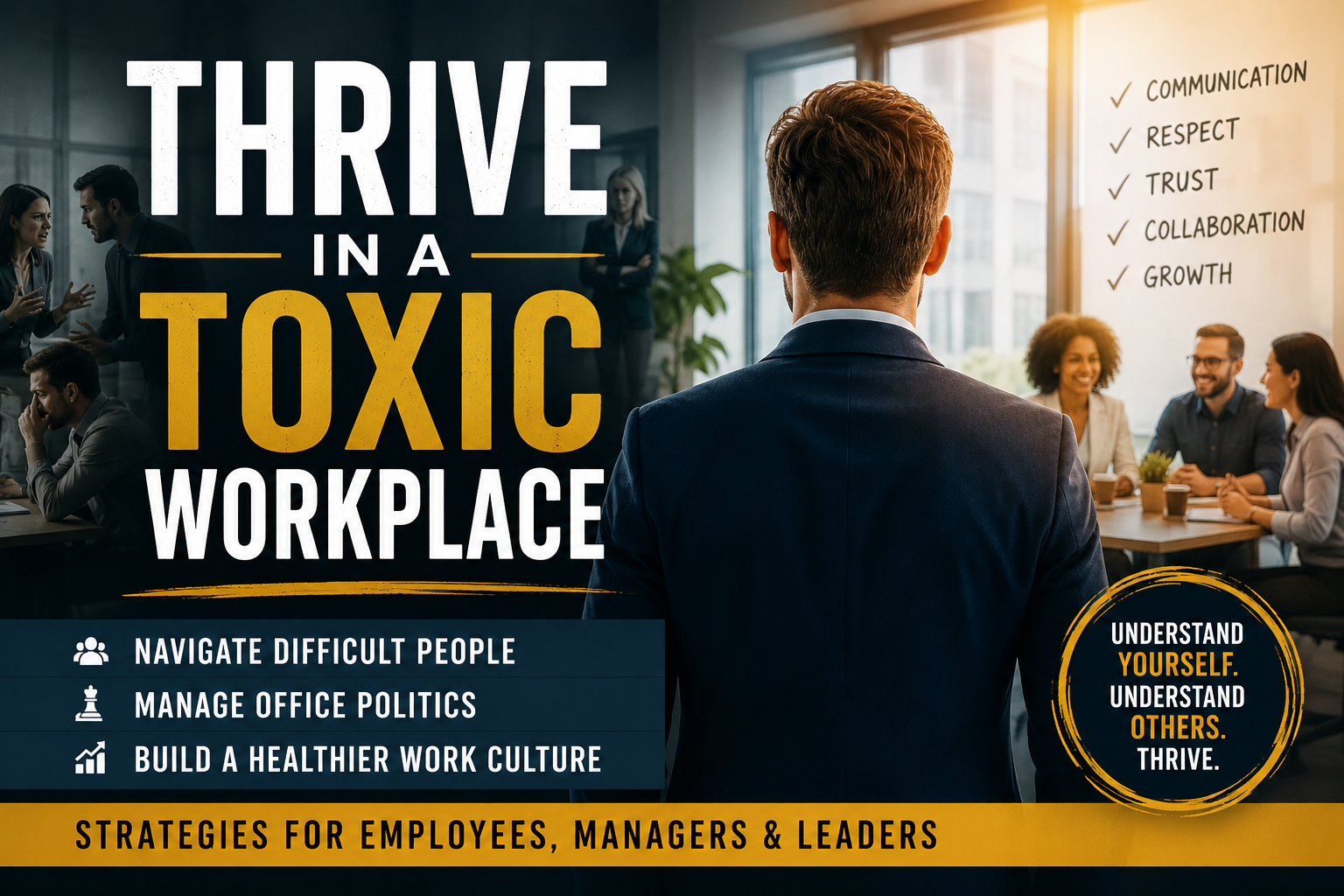
If you’ve spent any amount of time in the workplace, you’ve probably experienced at least one of these challenges. Whether you’re an employee trying to survive a difficult environment or an employer trying to create a healthier culture, understanding people is one of the most important skills you can develop.
The good news?
You don’t have to become a victim of workplace dysfunction.
You can learn how to navigate difficult personalities, improve communication, establish healthy boundaries, and become the kind of leader, employee, or business owner who helps create a thriving culture instead of contributing to the chaos.
Why Workplace Culture Matters More Than Ever
Research consistently shows that workplace culture has a direct impact on employee satisfaction, productivity, retention, profitability, and overall organizational success.
Yet many businesses spend thousands of dollars on systems, software, and marketing while investing very little in helping people understand how to work effectively with one another.
The result?
- Miscommunication
- Unnecessary conflict
- Poor morale
- High turnover
- Burnout
- Decreased productivity
The reality is that most workplace problems are not process problems.
They’re people problems.
And people problems can often be solved when we better understand ourselves and others.
For Employees: How to Navigate a Difficult Workplace
1. Learn to Separate Personality from Intent
One of the biggest mistakes people make is assuming that every frustrating interaction is personal.
Sometimes your manager isn’t trying to be difficult.
Sometimes they communicate differently than you.
Sometimes your coworker isn’t intentionally dismissive. They may simply process information differently.
Before assigning negative motives, ask yourself:
- Could this be a communication style difference?
- Am I interpreting their actions correctly?
- Have I clearly communicated my expectations?
Many workplace conflicts are misunderstandings rather than malicious behavior.
2. Stay Out of the Gossip Cycle
Office gossip is one of the fastest ways to damage your reputation.
It may feel harmless in the moment, but it creates distrust throughout an organization.
Professionals who advance in their careers tend to become known for bringing solutions rather than spreading complaints.
When conversations become negative, redirect them toward constructive outcomes.
People notice.
Leadership notices.
Your future opportunities often depend on your reputation more than your resume.
3. Focus on What You Can Control
You cannot control your boss.
You cannot control your coworkers.
You cannot control company politics.
You can control:
- Your attitude
- Your preparation
- Your communication
- Your professionalism
- Your emotional responses
The people who thrive in difficult environments focus their energy on what they can influence instead of becoming consumed by what they cannot.
4. Build Communication Skills
Your ability to communicate effectively may determine your career more than your technical skills.
People often believe they’re communicating clearly when they’re actually communicating through assumptions.
The more self-aware you become, the more effective your workplace relationships become.
One of the resources I recommend is our free communication and personality assessment tools available through Coach With TW3. These tools help people understand:
- Their natural communication style
- Their strengths
- Their blind spots
- How others perceive them
- How to communicate with different personality types
You can learn more and access these resources at CoachWithTW3.com.
For Employers and Leaders: Creating a Healthier Workplace Culture
1. Your Team Reflects Your Leadership
Culture starts at the top.
If communication is poor at the leadership level, confusion spreads throughout the organization.
If accountability is inconsistent, frustration grows.
If expectations are unclear, performance suffers.
Great leaders understand that culture isn’t created by motivational posters on the wall.
Culture is created by what leaders consistently tolerate, reward, and model.
2. Stop Managing Everyone the Same Way
One employee may need detailed instructions.
Another may thrive with autonomy.
One person wants frequent feedback.
Another prefers independence.
The most effective leaders understand that people are different and require different approaches.
This isn’t favoritism.
It’s leadership.
The better you understand personality differences, the better you’ll become at developing people.
3. Address Problems Early
Small issues rarely stay small.
When difficult conversations are avoided, resentment grows.
When accountability is delayed, performance declines.
When expectations aren’t addressed, confusion becomes culture.
Healthy organizations don’t avoid difficult conversations.
They have them respectfully, promptly, and constructively.
4. Invest in Personal Development
The best organizations understand that training isn’t an expense.
It’s an investment.
Employees who understand themselves communicate better.
Managers who understand people lead better.
Teams that understand one another collaborate better.
The return on investing in people often exceeds the return on investing in technology.
The “Old Yeller” Leadership Problem
One of the most common workplace challenges is what I call the “Old Yeller” approach to leadership.
You’ve probably seen it.
Maybe you’ve experienced it.
A leader who believes the solution to every problem is to raise their voice, increase pressure, or create fear.
The problem is that fear may create compliance, but it rarely creates commitment.
People may do what they’re told because they’re afraid of consequences, but they won’t bring their best ideas, creativity, or engagement to the table.
If you’d like to dive deeper into this topic, I encourage you to listen to my podcast episode:
670: Taming the Old Yeller Approach
In that episode, I discuss why emotional intelligence, communication, and self-awareness are becoming some of the most valuable leadership skills in today’s workplace.
Understanding Yourself Is the Competitive Advantage
Many people spend years trying to change everyone around them.
Very few spend enough time understanding themselves.
Yet self-awareness is often the breakthrough that changes everything.
When you understand:
- How you communicate
- How you handle conflict
- How you process information
- What motivates you
- What frustrates you
- How others experience you
You become more effective in every relationship—professionally and personally.
Whether you’re an employee trying to advance your career, a manager trying to build a stronger team, or a business owner trying to create a healthier culture, personal growth remains one of the highest-return investments you’ll ever make.
Final Thoughts
You may not be able to eliminate every difficult person from your workplace.
You may not be able to remove every challenge, every personality conflict, or every office politics situation.
But you can become better equipped to navigate them.
The people who thrive professionally aren’t necessarily the smartest people in the room.
They’re often the people who understand themselves, understand others, and have learned how to communicate effectively under pressure.
If you’d like to better understand your communication style, leadership strengths, workplace tendencies, and personality dynamics, I invite you to take advantage of our free assessment tools and resources.
Visit CoachWithTW3.com to get started.
Remember: You don’t have to spend your career simply surviving difficult workplaces.
With the right skills, awareness, and coaching, you can learn how to thrive.
Ready to Grow Your Business?
Discover the marketing systems, AI tools, lead generation strategies, automation resources, and business coaching programs available through TW3.
Whether you need more leads, better follow-up, AI-powered marketing, or a clearer growth strategy, our Start Here page will point you in the right direction.
